

Maxint
Building an autonomous financial OS across six platforms with Flutter
Success metrics
65%
code avoided vs native multi-platform
3-4x
fewer front-end engineers needed
6
platforms launched from day one
Maxint is an autonomous financial operating system. Built with Flutter, it unifies enterprise accounting, multi-platform monetization, and AI-powered robo-advising into a single, precision-engineered workspace designed to provide the signal minus the noise.
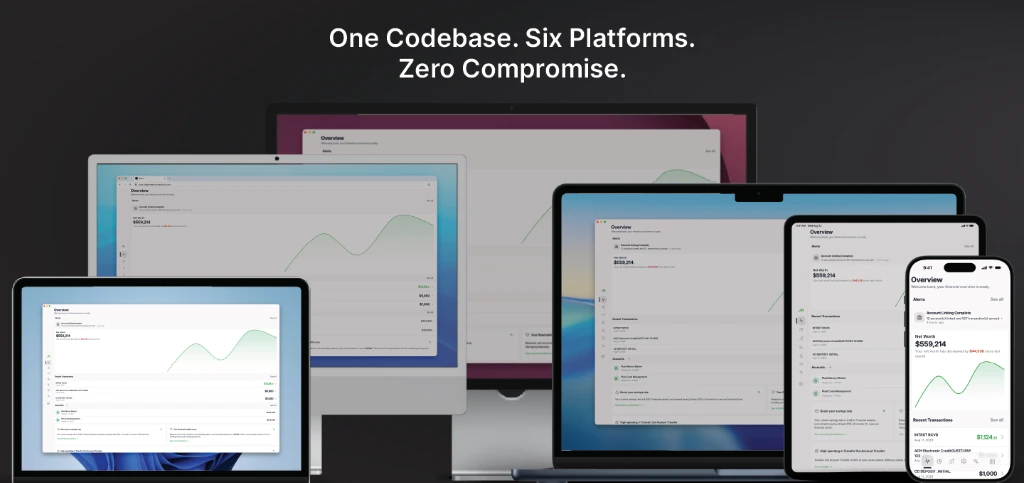
As a lean startup, Maxint needed to rapidly deploy an enterprise-grade financial operating system across iOS, Android, macOS, Windows, Linux, and Web simultaneously. By launching on every major app store from day one, the team leveraged organic search discovery across multiple platform ecosystems to drive consistent user growth without spending a dollar on paid marketing.
Trial by fire: From hackathon to production in three months
Rather than spending weeks evaluating frameworks in committee, the team tested Flutter during the TechCrunch Disrupt hackathon. Faced with tight time constraints after evaluating options like React Native, Ionic, Xamarin, and native platforms, they chose Flutter to build a fully functional proof of concept for Maxint in less than 24 hours.
The 24-hour sprint validated Flutter's developer velocity, responsive charting, and local state management across devices. Following the hackathon success, a lean team spent three months architecting the production-ready financial OS, deploying native applications across all six target platforms simultaneously—a timeline that likely would have required over a year using siloed native teams.
Why Flutter? Single codebase portability and rendering performance
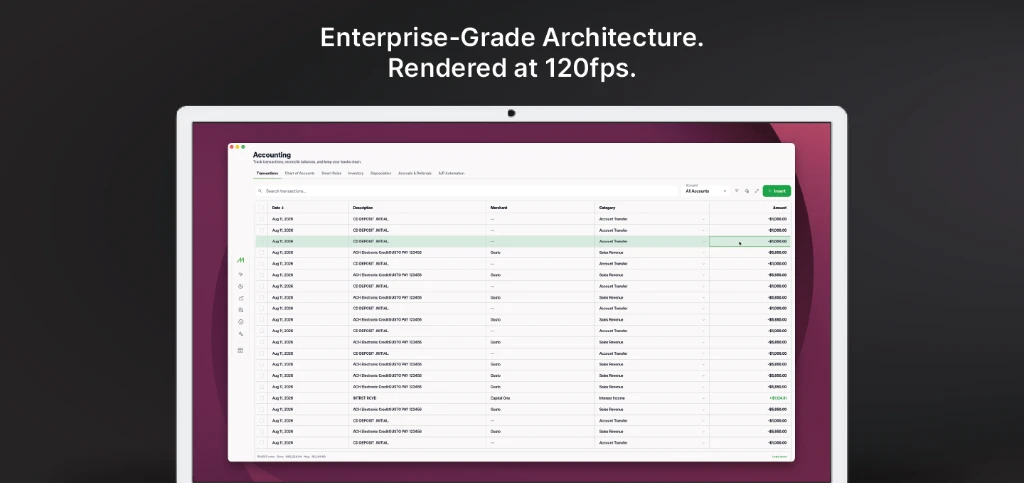
Portability across desktop and mobile served as Maxint's foundational growth engine. By maintaining a single Dart codebase, complex mission-critical logic—such as their double-entry ledger, local encryption, and financial reporting engine—only had to be written and audited once, guaranteeing complete feature parity and data accuracy across all user devices.
To meet the high UI performance standards of financial software, Maxint relies on Flutter's Impeller rendering engine on iOS and Android. By pre-compiling shaders ahead-of-time (AOT) and using modern native graphics APIs like Metal and Vulkan, Impeller renders complex, data-dense financial charts at 120 frames per second without blocking the UI thread. Additionally, Flutter's hot reload feature accelerated iteration, allowing the team to refine dense ledger layouts and state logic without restarting the app.
Building Finsight: Bidirectional conversational AI with Flutter
Maxint built Finsight, a fluid voice-driven financial assistant, directly within
the Flutter ecosystem by orchestrating
speech_to_text and
flutter_tts. The application uses
continuous listening and partial transcription to stream user queries to
language models while the user speaks, minimizing perceived latency.
When generating spoken feedback, Finsight attaches context tags (such as urgent
alerts or routine portfolio summaries) to dynamically adjust parameters like
setSpeechRate and setPitch in flutter_tts. Using
Riverpod for state management, the on-screen visualizer
pulses in synchronization with audio callbacks, maintaining a unified
interactive state across mobile, desktop, and web platforms.
Overcoming multi-platform friction: Building Orca
Synchronizing user entitlements across the Apple App Store, Google Play, Microsoft Store, and Stripe presented a major technical hurdle due to isolated store silos. To solve multi-platform subscription management, Maxint developed an internal unified billing infrastructure and released it to the developer community as Orca.
Building for desktop also required investing in desktop-native UX paradigms, including information-dense layouts, robust keyboard shortcuts, right-click context menus, and window state management, while keeping double-entry ledger math completely isolated from UI rendering.
Key results and business impact
Building with Flutter transformed Maxint's resource efficiency and release cadence:
- 65% less code: Avoided writing and maintaining at least 65% more code compared to managing separate native codebases (Swift, Kotlin, C#, C++, and TypeScript).
- 3x to 4x team efficiency: Operates with 3x to 4x fewer front-end engineers than needed for native multi-platform parity.
- Day-one six-platform cadence: Pushes simultaneous, feature-complete updates to iOS, Android, Web, macOS, Windows, and Linux on a weekly basis.
- Ecosystem contribution: Created and launched Orca to streamline cross-platform billing for Flutter developers.
What's next for Maxint and Orca
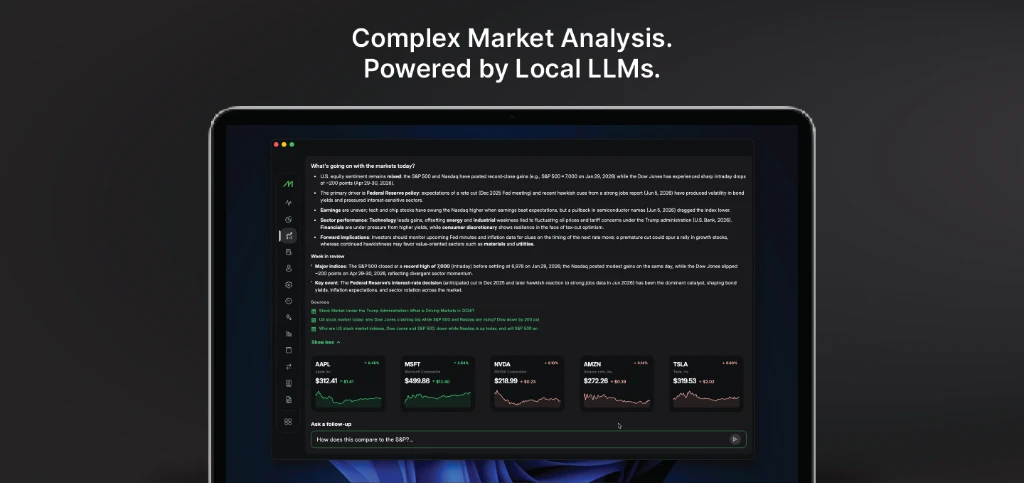
Maxint's roadmap includes expanding Orca's SDK capabilities across web and desktop platforms for unified paywalls and revenue analytics. For the core platform, Maxint is building upon its current on-device receipt parsing, powered by Google’s ML Kit, by doubling down on privacy-first AI intelligence. The team is integrating small-footprint local LLMs (including custom 135M-parameter transformer models) to execute highly advanced document parsing, cashflow forecasting, and transaction categorization entirely on the user's hardware. The team is also expanding their tax engine to support multi-jurisdiction calculations, local currency reconciliation, and native electronic tax filing with the IRS.